Another year has passed, and we are one step closer to dreams of tomorrow. Here are the most futuristic developments of 2016. This year we saw the wild growth of artificial intelligence in all spheres, the green light for genetic research, the development of virtual reality and much more. Go.
Artificial Intelligence finally defeated the world champion in th
In a tournament that challenged the historical significance of Deep Blue's victory over grandmaster Garry Kasparov in a chess match in 1996, AlphaGo from Google won in four of the five games played against world champion Liu Sedol. Before the tournament, some experts naively assumed that the machine will not have a single chance against a person in a game known for its complexity and intricacies.

After losing, Sedol shyly admitted: "After my experience with AlphaGo, I have a little doubt about classical beliefs, so I need to do more research." The defeat of Sedol became a loud reminder that cars quickly catch up with people in the level of intelligence and that no one is immune from the power of AI.
Self-governing cars Uber have become a reality

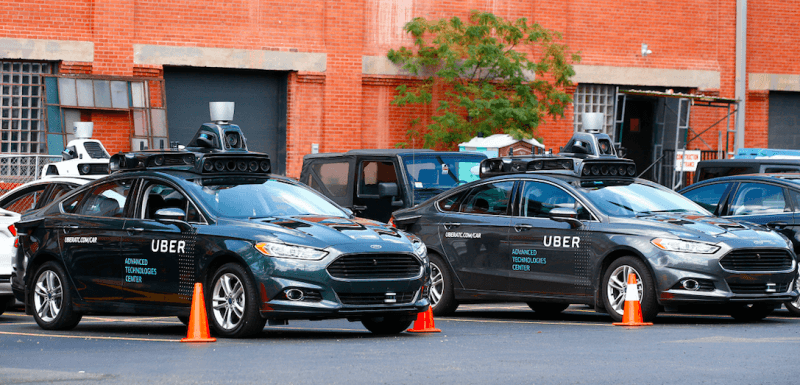
We knew that self-governing taxis would inevitably appear, but when Uber deployed a fleet of autonomous vehicles in October, it was a shock - and marked the beginning of a new era in transportation. Self-managed cars are far from perfect and in some countries are generally prohibited, but it will take a little time - and they will be everywhere.
Welcome the world's first child with three genetic parents

A controversial method, known as mitochondrial core transfer, was used to make a boy using genetic material from three different parents. This therapy does not allow the transfer of problem characteristics from the mother to the child - in this case there was a debilitating syndrome of Lee, leading to a fatal outcome and affecting the development of the nervous system. In the US, this method has not yet been authorized, so Dr. John Zhang of the New Hope Fertility Center conducted a procedure in Mexico, where there are no such restrictions.
The girl won the right to cryogenic freezing
A 14-year-old girl with brain cancer at the terminal stage achieved her dying wish when the British court granted her request - to be frozen at a cryonics factory in the US. The teenager's father, deprived of parental rights, initially opposed her wishes, but the court decided that the mother would better dispose of the girl's wishes in her best interests.

The teenager has already died and is now frozen at the Institute of Cryonics in Michigan. This precedent has shown that the desire to be preserved in a giant tank of liquid nitrogen can not be challenged even by the parents.
Scientists have created an artificial life form of only 473 genes
Scientists from the Institute of Synthetic Genomics and the J. Craig Institute designed and created a "minimal" synthetic bacterial genome, which is smaller than any other in nature.
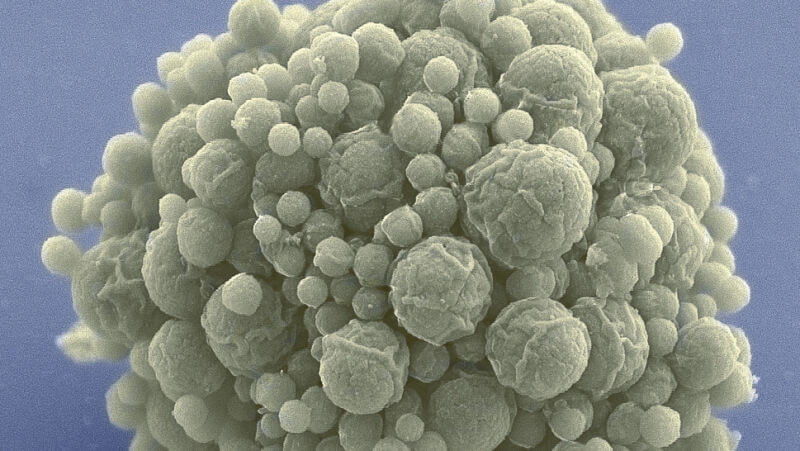
The task of the experiment was to create a basic genome, which scientists could use to study life, and on its basis add new sets of genes. Syn3.0 is a bacterium of 473 genes that can be used to create virtually any cell type with pre-determined properties. This will allow scientists to create artificial life forms that can be used to produce new drugs, biochemistry, biofuels and food.
Geneticists used CRISPR to increase human potential
In 2015, a group of Chinese scientists was the first to use the CRISPR gene editing tool to modify a human embryo, removing the defective gene responsible for fatal blood disease (after the experiment, the emibrios were destroyed). In April of this year, a second group of Chinese researchers used CRISPR for something more interesting: it endowed human embryos with improved biological abilities.

In particular, the researchers introduced a beneficial mutation that changes the gene of immune cells and prevents HIV from entering the cells of the human immune system (as in the experiment of 2015, embryos were later destroyed). A small part of the human population has this built-in immunity, but the experiment showed that CRISPR can be used to make it publicly available.
A research team from the University of Sichuan in China supplied modified cells of the immune system to a patient suffering from an aggressive form of lung cancer. Scientists used CRISPR-Cas9 to make cells more resistant to the presence of cancer, thus marking the first use of a powerful gene editing tool for treating a living person.
Neural interfaces significantly advanced
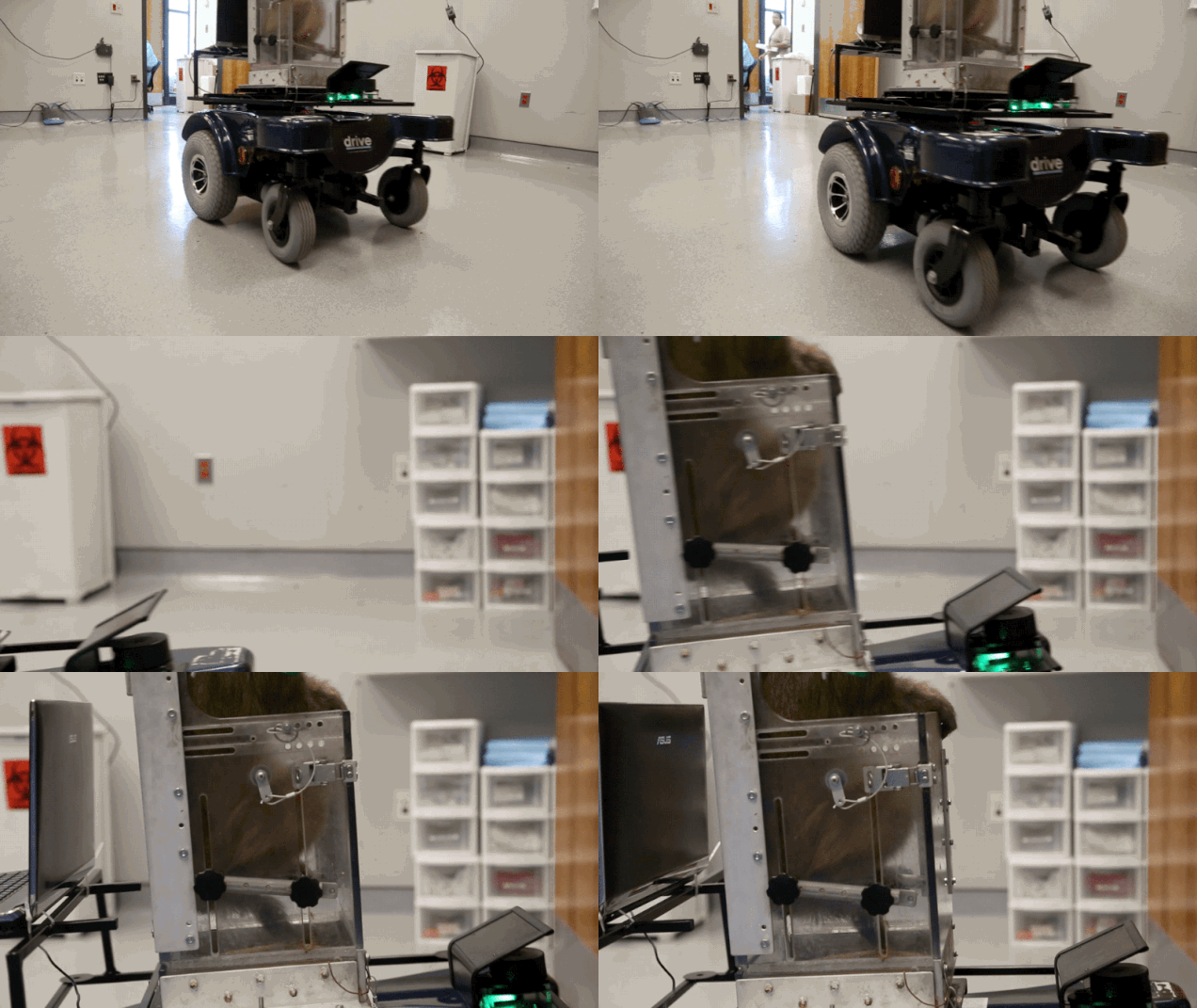
It was a big year for the neurocomputer interfaces. A group of researchers led by Miguel Nicoleis of Duke Health developed a wireless neurocomputer interface that allows monkeys to control the movements of a robotic wheelchair using only the power of thought, while a team from the Swiss Federal Institute of Technology in Lausanne implanted a neural device to restore motor abilities in paralyzed primates.
Scientists from the Netherlands successfully tested a brain implant that allowed a patient with Lou Gehrig's disease at a late stage to make messages at a rate of two characters per minute, and in a similar experiment, monkeys with a neurocomputer interface were able to print 12 words per minute with the help of thought power. Scientists from the Johns Hopkins University demonstrated a system that allowed a person to move individual fingers of the prosthesis with the power of thought. And a group from the Memorial Institute Battelle developed a brain implant that allowed a paralyzed person to play Guitar Hero with the hands, making him the first person to restore the function of the body using brain signals.
Persuasive virtual reality finally appeared on the market

After a nauseating level of expectation and deception, completely immersive sets of virtual reality finally became available to consumers, albeit with a high price tag. Products such as Oculur Rift and HTC Vive justified even the most overstated expectations. These devices are truly amazing and deliver exactly as much pleasure as people wanted.
Scientists have completed the plan to create a synthetic human genome from scratch
Last May about a hundred scientists, lawyers and entrepreneurs held a secret meeting to discuss the possibility of creating a synthetic human genome. Journalists were not invited, and visitors were told to keep their mouths shut. A month later, Harvard biologist George Church said that it was unnecessary, and the Human Genome Project-write project, the project of writing the human genome - is an attempt to build and deploy a completely artificial genome in human cells for a decade.

Researchers hope to develop powerful new technologies that will allow them to connect long strings of artificial human DNA, and then remove these synthetic cells in a petri dish - that's all. At least that's what they say. And it would seem, there is nothing to discuss, but research in this area will one day lead to the creation of artificial organisms and even designer babies.
Alternative energy sources grow faster than all the rest
In October, the report of the International Energy Agency showed that the growth of renewable energy capacity is at a record high, reaching a mark of 153 GW (this is approximately all of Canada's energy production). Most of this growth is due to new objects of coastal wind and solar power plants (about half a million solar panels were installed daily around the world last year).

The IEA says that for the first time "renewable sources account for more than half of the net annual additions to the energy capacity and they have caught up coal by the total installed capacity in the world." Technically speaking, we reached this milestone in 2015, but did not understand this until October 2016.
The "lost" algorithm crashed the British pound
On October 7, the British pound suffered from a "sudden malfunction," falling 6% against the dollar in six minutes. Experts point to high-frequency stock trading as the culprit - and, perhaps, to one algorithm that reacted to the comments of French President Francois Hollande calling for tougher negotiations on Brexit. This case points to our dependence and the growing power of bots and algorithms, which are becoming increasingly difficult to control.

A new promising way to keep the brain after death is found
Using a chemical compound to turn the rabbit's brain into a vitreous state and then cool it to liquid nitrogen temperature, scientists from 21CM showed that it is possible to achieve an almost perfect long-term structural preservation of the intact brain of mammals.

The new method will allow scientists to learn the brain in unprecedented detail, and can also be applied to cryonics, the practice of keeping a person in a cold state, in the hope that one day he will return to life. This method essentially turns the brain into an inert piece of plastic, destroying all the biological components in the process.
We made a big step towards nuclear fusion
In February, German scientists used an experimental device of nuclear synthesis to produce hydrogen plasma. In the course of the experiment, a 2-megawatt pulse of microwave energy exploded a cloud of gaseous hydrogen, turning it into a hydrogen plasma of extremely low density.

It lasted only a fraction of a second, but reached a temperature of 80 million degrees, similar to the one on the Sun. It will be some time before we get to the safe, stable and retained nuclear fusion, but this experiment has become an important step in this direction.
The article is based on materials .
Comments
Post a Comment