
Speaking of the Vatican, it is difficult to imagine high technology - rather, here we are talking about traditional values from the old world. However, even the conservative Vatican sometimes has to follow new trends in order to keep up with the modern world. In April of this year, we already wrote that the Vatican Apostolic Library is going to digitize its entire collection of priceless scrolls, ancient folios and manuscripts and make them public, providing free online access to these invaluable materials.
As you know, the collection of manuscripts stored in this state is one of the oldest and richest in the world. The Vatican Library was founded in 1451 AD and during this time it has accumulated more than 80 thousand different manuscripts, printed graphics, drawings, tablets and incunabula (printed books before 1500) written by people of different faiths from all over the world.
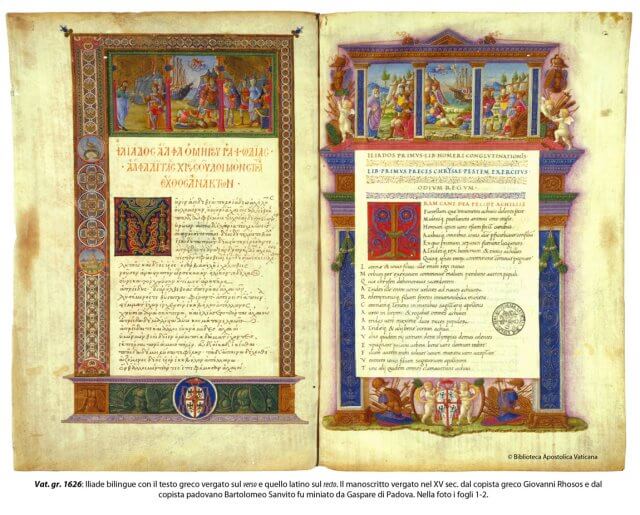
Digitized bilingual version of the Iliad (in Greek and Latin languages)
It contains letters composed by important historical figures, drawings and sketches by artists and scholars such as Michelangelo and Galileo, invaluable collections of rare Chinese manuscripts, which the Vatican took over from the time of early papal scholars, as well as major political treaties of all eras in history. It is very likely that illustrations and documents once confiscated from the first-ever scholars who, in the opinion of the early holy church, wrote anti-Christian texts are stored here.
The ancient documents in the framework of the DigitaVaticana program were decided to be stored in digital format by FITS, developed by NASA, the American aerospace agency, for storing images, as well as astronomical and astrophysical data. Until recently, only 500 different manuscripts and 600 incunabula were available in digital format, which could be found on The Vatican.
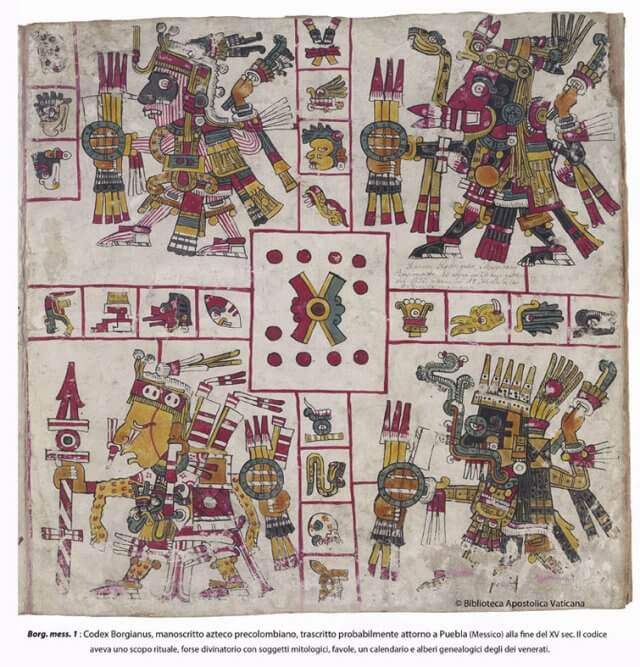
Digital copy of the Aztec manuscript of the pre-Columbian era, compiled, most likely, in the city of Puebla (Mexico) at the end of the fifteenth century
As we reported earlier, the Vatican decided to join efforts to digitize its library with the Japanese company NTT Data. By 2018, it is planned to digitize the next batch of 3,000 manuscripts. All digitized manuscripts will be available for review in high resolution using the technology of viewing digital archives AMLAD, developed by NTT Data. You can view images on a variety of devices, including tablets. Currently, 4415 different documents are digitized. You can get acquainted with them on the library website.
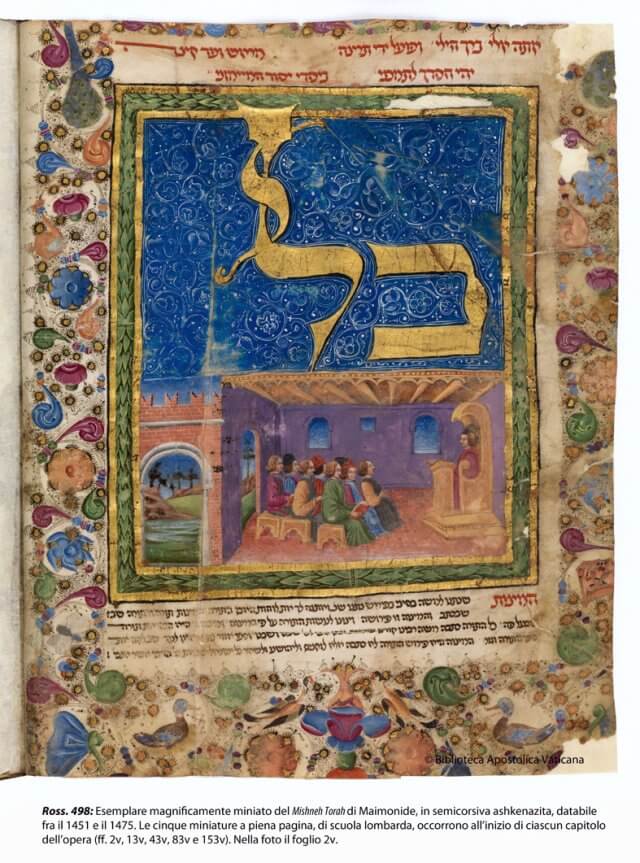
Beautiful illustration of the Mishne Torah manuscript. The Maimonides Codex in Hebrew. The creation of the manuscript dates back to 1451-1475.
Currently, users have to search for previously digitized library documents, each time selecting and clicking on the right name in the database of each page in each book, but by the end of 2014 the AMLAD application will have a more convenient built-in search method.
Now the Vatican is trying to collect donations to digitize the remaining 76 thousand library documents, work with which will take more than 15 years and will cost a total of more than 50 million euros and attracting more than 150 specialized experts.
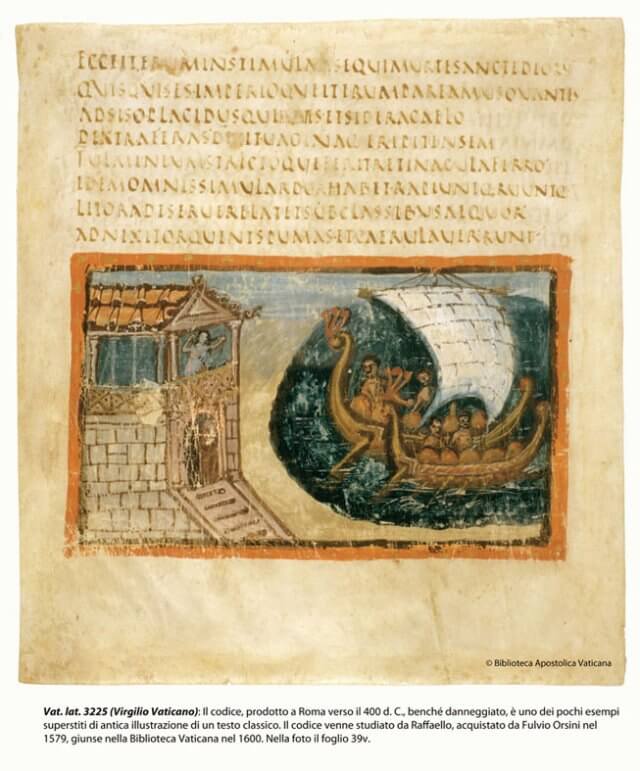
The Vatican manuscript, compiled in Rome around 400 AD, is one of several surviving examples of an ancient illustration of a classic text. The codex which Rafael studied and later acquired by Fulvio Orsini in 1579 became the property of the Vatican Library in 1600
In June of this year, the Vatican held an event to raise funds for the further digitization of its reserves, and even offered participating patrons an exclusive tour of the library areas that are always closed to public access. These include the halls of the library, laboratories and vaults, where priceless documents are kept under the strictest security As a nice bonus, all the patrons dined right in the Sistine Hall.
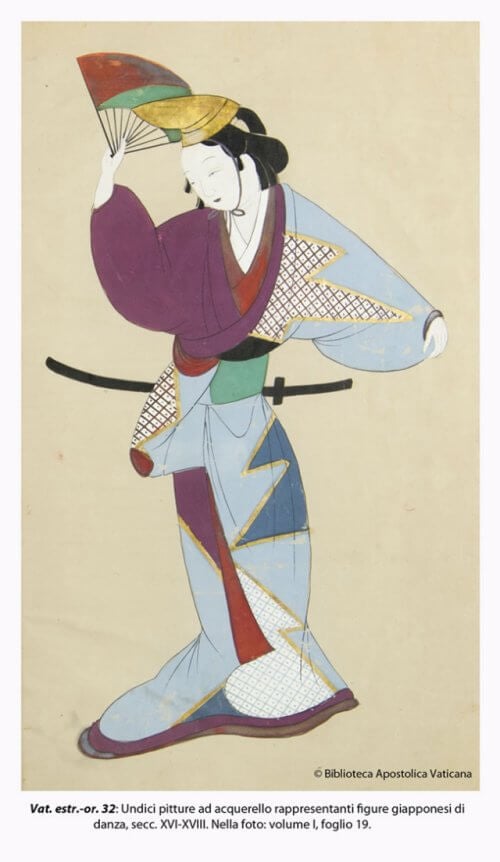
Figure Japanese dance. One of 11 images created by watercolor in the XVI - XVIII centuries.
In addition, the Vatican launched a crowdfunding campaign and offers to contribute 5 euros to save one page of manuscripts. If a person deposits at least 1000 euros, he will be able to see his name on the official list of main patrons. In addition, the Vatican is willing to accept help from other companies, concluding partnership agreements (as is the case with NTT Data) on the digitization of priceless texts.
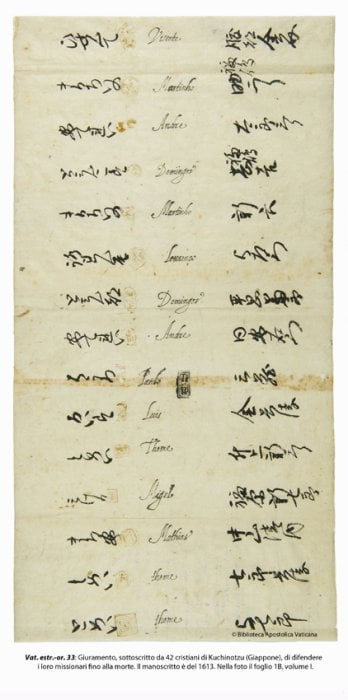
The oath, signed by 42 Christians Kucinotsu (a village in Japan), to protect missionaries until his death. Dated to 1613
“All originals are kept safe and sound inside the anti-nuclear bunkers,” the official website of DigitaVaticana reports.
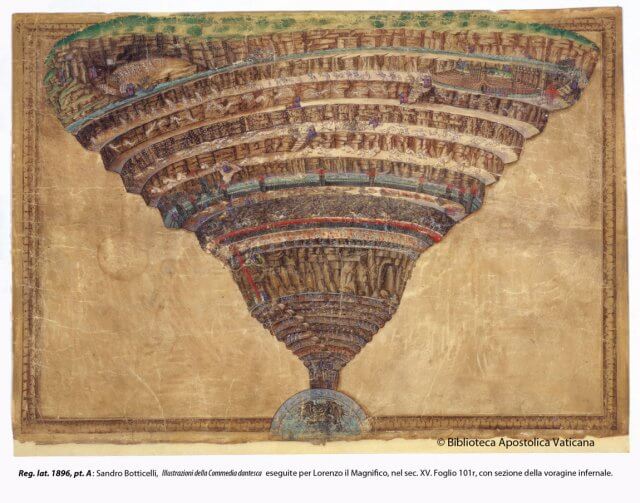
Illustration by Sandro Botticelli for the Divine Comedy commissioned by Lorenzo the Magnificent. Written in the XV century
“Thanks to technology, we can save our past and pass it on to the future. All manuscripts and manuscripts will be freely available on the website of the Vatican Library, and knowledge from all over the world will now truly become the property of all mankind. ”
The article is based on materials .
Comments
Post a Comment